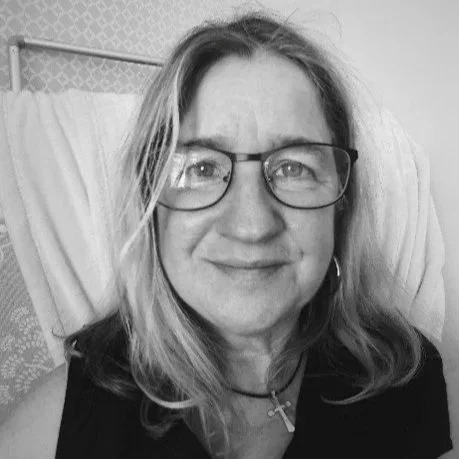
Carol Joyner, OTN Co-Chair & academic researcher
BISEXUAL CHRISTIANS have too often found themselves overlooked, misunderstood or unheard, both within the Church and in wider LGBTQIA+ conversations.
For Bisexuality Awareness Week (16th-23rd September), OTN Co-Chair Carol Joyner reflects on a new book she has co-authored with José Calvo Tello, bringing together the stories of 16 bisexual Christians from across Europe.
Bisexual Christian European: Bisexual Christian Life Stories from Around Europe grew out of a shared conviction that bisexual Christian lives deserve to be heard in their own right, and that telling these stories can challenge assumptions, inform research and help churches better understand the people within their communities. Carol reflects on why these stories matter, the experience of bringing them together, and the hope she and José found in discovering how faith and a proud bisexual identity can not only coexist, but flourish together.
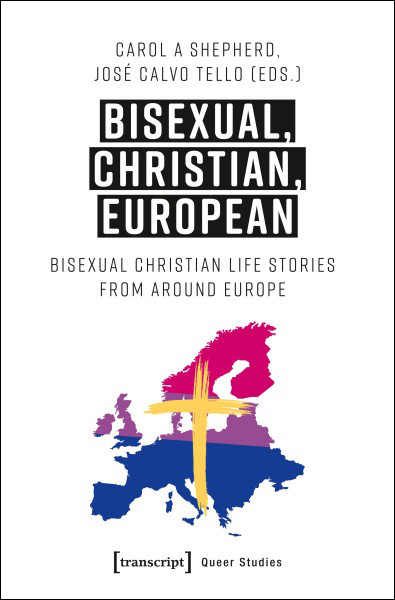
The cover of Bisexual Christian European: Bisexual Christian Life Stories from Around Europe eds. Carol A Shepherd & José Calvo Tello published by transcript Queer Studies.
José and I had not met prior to working on the book; he contacted me, having read Bi The Way: Pastoring Bisexual Christians In Europe, which I wrote during Covid lockdowns. We had some initial discussions, were very much aligned spiritually, politically and academically, and the rest is bi-story!
As I reflect on the creation of Bisexual Christian European: Bisexual Christian Life Stories from Around Europe, I am reminded of how urgently these narratives were needed and how long many of them have remained unheard. José and I chose this topic because, although acceptance of same‑gender relationships within the Christian Church is slowly increasing, ignorance and silence still surround the lives of bisexual Christians. Researchers lack data due to the conflation of bisexuality with homosexuality, while churches rarely address bi‑specific concerns.
Moreover, bisexual people themselves often keep their heads down and don’t talk, often because they feel isolated, unsure whether others share their experiences and uncertain that their stories will be understood. This cycle of silence has held back progress for decades and indeed was the focal point of my earlier book published in 2018, Bisexuality and the Western Christian Church: The Damage of Silence. Our new book seeks to break that cycle by offering real stories that can inform research, challenge assumptions, and help churches recognise the people they have too often overlooked.
The voices gathered in this volume offer perspectives that have been missing from both queer and Christian discourse. Bisexual people form the largest group within the LGBTQIA+ community (around 52%), yet they are frequently sidelined, especially in church contexts where sexual orientation is often discussed only in relation to same‑gender marriage. By sharing diverse stories from across Europe, stories from people of different genders, nationalities, denominations and relationship configurations, we highlight the discrimination, misunderstanding and rejection that bisexual Christians continue to face. It was important for both José and me, however, to offer hope. We were therefore thrilled and fascinated in equal measure to see how, at the same time, these accounts reveal how faith and a proud bisexual identity can coexist, strengthen one another and indeed flourish together.
This work is deeply connected to my role as Co‑Chair of the Open Table Network (OTN) where I go by my civilian name(!) of Carol Joyner. At OTN, we are committed to creating safe, affirming and explicitly LGBTQIA+‑inclusive Christian communities, where bisexual people are fully welcomed, seen and valued within our network. My position as an openly bisexual woman of faith is perhaps the most visible representation of this.
Too often, bi folks are told (implicitly or explicitly) that they do not fit neatly into either Christian or queer spaces. At Open Table, we reject that false binary. We recognise the richness and complexity of bisexual experience and we are determined to ensure that bi people are not only included but actively supported and celebrated. The stories in this book echo what we witness across our communities, namely, people longing for spaces where their whole selves can be held without compromise.
Our book also contributes to current research debates by highlighting aspects of queer Christianity that have been largely ignored. Conversations about queerness in theology and church life often focus on same‑gender marriage or gender identity. These are vital issues and they appear in our volume, too. But bisexual people face additional challenges around visibility, acceptance, identity maintenance in different‑gender or same‑gender relationships, as well as bi‑specific coming‑out journeys. These questions form the core of our book and in our view, deserve far more attention in both academic and pastoral practice. Bisexual lives are by their very nature, intersectional, and it was important to convey the full range of bisexual intersectional identities.
José and I had a discussion around which bisexual figures from antiquity and modern life with whom we would love to share this book! If I could discuss this book with anyone, I would choose people whose lives raise fascinating questions about sexuality, spirituality and identity. It would be historically inaccurate to apply modern bisexual identity labels to people before the late 1960s/1970s, yet many might well identify as bisexual today. Mexican artist Frida Kahlo, for instance, was widely understood to be both bisexual and deeply spiritual. For José, the biblical figure David also invites rich conversation; exploring themes of same‑gender affection, desire and the complexities of coming out with him would be extraordinary!
